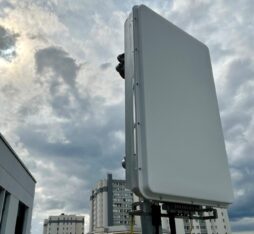
C-RAN ("Centralized Radio Access Network", or "Cloud Radio Access Network") is a new architecture for radio access networks that promises increased performance and reduced costs for mobile networks.
Telecom operators are facing an exponential increase in mobile data volumes.
At the same time, the emergence of new technologies, such as augmented reality, the internet of things and self-driving vehicles, is leading to greater constraints on service quality.
To meet these challenges, operators defined a new radio access architecture, C-RAN.
In a mobile telecommunications system, the RAN (Radio Access Network) is the part that connects user terminals to the core network via radio access technologies. It consists of a large number of base stations.
In a conventional “distributed” architecture, the radio unit, called the Remote Radio Head (RRH), and the processing unit, called the Base Band Unit (BBU), are separate but located in the same place, in each base station.
In C-RAN architecture, the BBUs are delocalized and grouped together in a pool. However, they are still connected to the RRHs, via a fibre optic link referred to as the Fronthaul (FH).
C-RAN architecture has many advantages such as the reduction of operating costs and power consumption in base stations, and the simplification of the network architecture allowing faster large-scale deployments.
Based on an open platform and cloud computing, C-RAN also supports multi-supplier environments and dynamic allocation of shared pool resources through virtualization.
To ensure the high bandwidth and very low latency necessary for the RRH-BBU connection, C-RAN requires the implementation of a dedicated fibre link between the BBU pool and each RRH site.
The advantages of C-RAN make it one of the key technologies in the development of new generations of mobile networks.