
Voice without vocal cords: a machine learning assisted device that enables patients to speak
• A soft robotics device developed at the University of California (UCLA), which uses magnetoelastic actuators to produce sound, will enable patients without vocal cords to recover the power of speech.
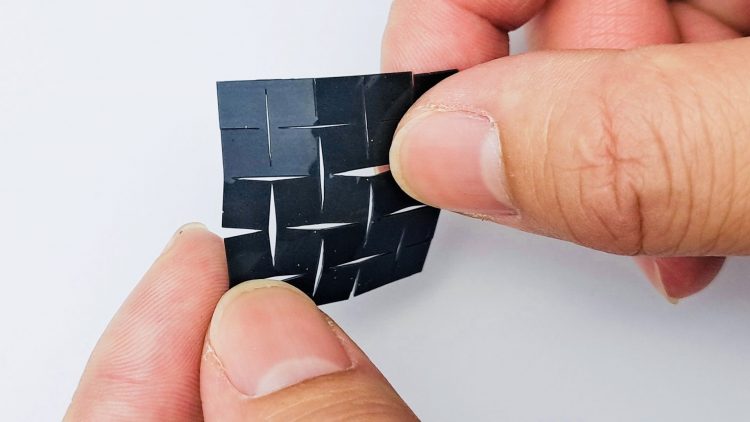
• The light and flexible device, which is worn on the throat, converts laryngeal muscle movement into electrical signals with a sensor design inspired by the art of kirigami (a Japanese modelling technique that uses a single incised sheet of paper), which enables patients to communicate when, for example, they are recovering from treatment for voice disorders.
• Assisted by a machine learning algorithm, the device, which provides an adaptive and customizable solution for individual users, can extract more than 94% of the semantic content from signals derived from movement on patients’ throats.
Read the article
• The light and flexible device, which is worn on the throat, converts laryngeal muscle movement into electrical signals with a sensor design inspired by the art of kirigami (a Japanese modelling technique that uses a single incised sheet of paper), which enables patients to communicate when, for example, they are recovering from treatment for voice disorders.
• Assisted by a machine learning algorithm, the device, which provides an adaptive and customizable solution for individual users, can extract more than 94% of the semantic content from signals derived from movement on patients’ throats.

Neurotechnology: auditory neural networks mimic the human brain
Read the article

Portable IoT device helps Parkinson’s disease patients to manage their symptoms
Read the article

FoodProX uses machine learning to detect ultra-processed food
Read the article